
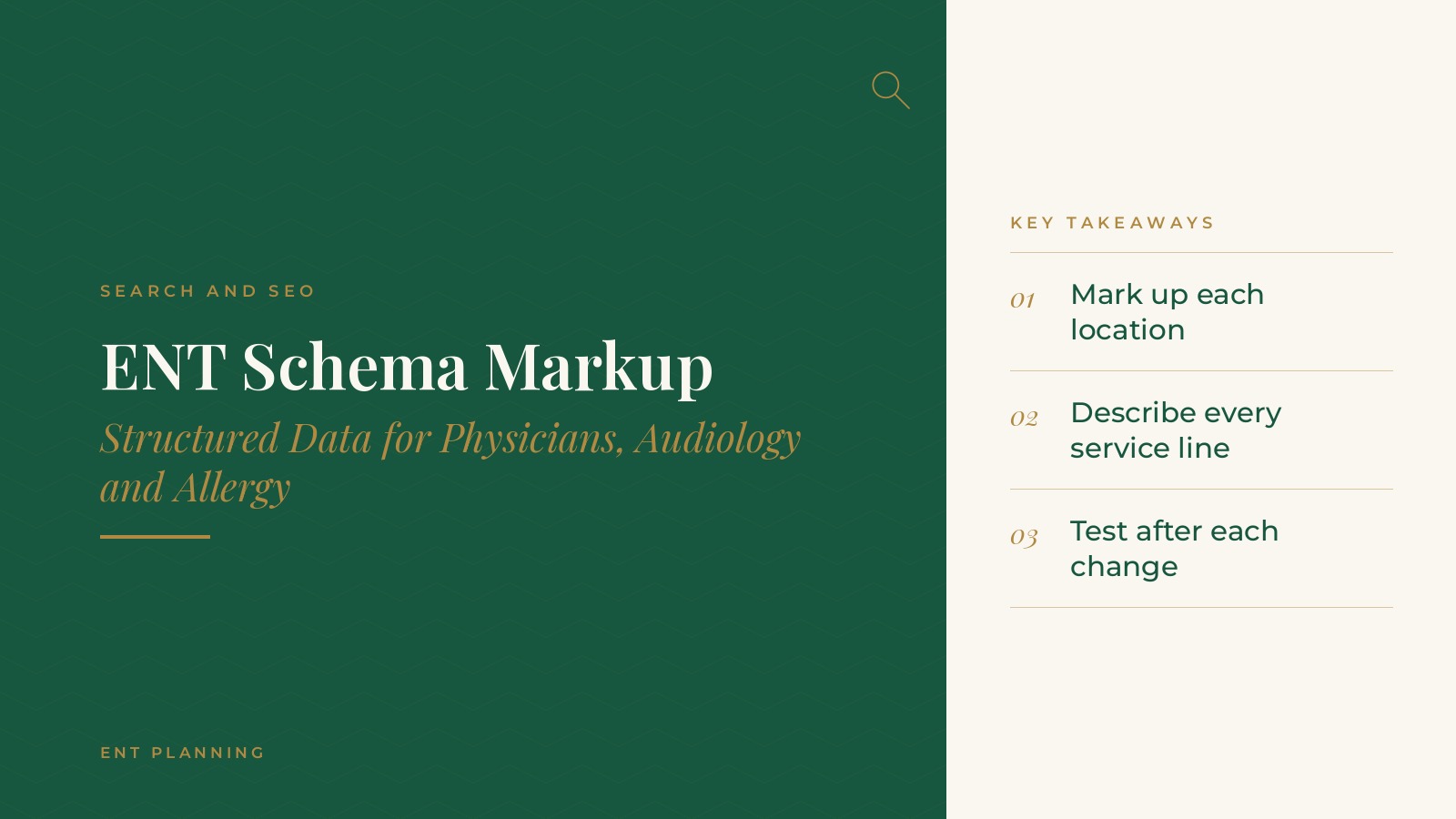
ENT Schema Markup | Structured Data for Physicians, Audiology and Allergy
ENT schema markup is structured code added to an ENT practice website that tells search engines, in a standard format, who the practice is, where its offices are and which services it offers, from physician visits to audiology and allergy care. Patients never see it, but it helps search engines and AI tools read each page correctly.
In short, ENT schema markup tends to work best when the practice describes its organization and every office, marks up physician and audiologist profile pages, labels each service line page clearly, uses FAQ markup only for questions that appear on the page and tests the code whenever the site changes.
This resource from ENT Planning explains what structured data does, which types ENT sites commonly use, how markup reflects physicians, audiology and allergy services, how it supports AI search, how it is tested and the questions practices often bring to a marketing professional.
Key takeaways
- Describe the practice and every office.
- Mark up physician and audiologist profiles.
- Label each service line page clearly.
- Use FAQ markup only for on-page questions.
- Test markup whenever the site changes.
What ENT schema markup does
A standard vocabulary
Schema markup uses terms from schema.org to label facts such as a practice name, address, phone number, clinician name or service. Most sites place it in a JSON-LD block in the page code.
Clarity for search engines
ENT practices cover a wide range of services, including sinus, ear, throat, sleep, hearing and allergy care. Markup helps search engines connect each page to the right topic and the right office.
Several clinician types in one practice
Physicians, audiologists, allergy staff and sometimes sleep specialists may all appear on one site. Markup helps keep each clinician tied to the right service and office.
No change for visitors
The page looks the same to patients. The markup simply adds a clear, machine-readable summary behind the scenes.
Common schema types for ENT websites
Organization and offices
Many ENT groups describe the practice as an organization and each office as a medical clinic location with its address, phone, hours and map link.
Physicians and audiologists
Profile pages for physicians and audiologists often carry Person or Physician markup with the clinician's name, specialty, office locations and a link back to the practice.
Service and condition pages
Pages about sinus care, hearing evaluations, allergy testing and sleep services can be labeled with medical procedure, medical test or medical condition types that name the page topic. The ENT condition pages guide covers how those pages are usually organized.
Blog posts
Articles often use BlogPosting markup with the headline, author name and publish date, so each post is read as its own piece of content.
ENT Planning can introduce you to independent SEO and website professionals who work with ENT practices on structured data, service line pages and technical SEO. To request an introduction, contact us or call or text (972) 616-4581. You can also read about website design for ENT practices.
Marking up physicians, audiology and allergy services
Each service line as its own page
ENT schema markup works best when each service line has a dedicated page. A hearing page, an allergy page and a sinus page each get markup that matches their own content.
Audiology within the practice
Audiology services can be described on their own pages with the audiologists who provide them and the offices where hearing evaluations take place.
Allergy services and locations
Allergy testing and shot clinics sometimes run at only some offices or on set days. Markup on each location page can list the services offered at that office, matching what the page says.
Linking it together
Internal links between service pages, clinician profiles and location pages reinforce the same connections the markup describes. The ENT internal linking guide covers that structure.
FAQ markup for ENT pages
Questions that already appear
FAQ markup describes question and answer pairs that are visible on the page. Many ENT practices add short FAQ sections to service pages and articles and mark those up.
Matching text exactly
The questions and answers in the code usually match the on-page wording word for word, so the page and markup agree.
Enhanced results vary
Search engines decide when to show enhanced listings, and their rules change. Practices tend to see FAQ markup as a way to make content clear rather than a way to control how results look.
How ENT schema markup supports AI search and local results
Clear facts for AI tools
AI search tools summarize pages they can understand. Structured details about clinicians, offices and services make those facts easier to identify. A marketing professional can explain how AI visibility for ENT practices work uses structured data.
Matching map listings
Office names, addresses and phone numbers in the markup usually match the practice's map listings and directory profiles exactly, which reinforces consistent details.
Groups with several offices
Each office page can carry its own location markup. The ENT multi-location SEO guide covers the wider plan for groups with several offices.
Testing and maintaining ENT schema markup
Testing after changes
Marketing and web professionals usually run a schema validator and the search engine's rich results test after adding or editing markup to catch errors and missing fields.
Keeping markup current
New clinicians, office moves, changed hours and redesigned pages can leave markup out of date. Many practices add a markup check to every website update.
Watching for errors
Search console reports flag structured data issues across the site, which helps catch pages that changed without anyone updating the code. A web professional can explain how website design for ENT practices projects usually include structured data from the start.
A simple markup inventory
A short record of which page types carry which markup, and where the code sits in the website builder, makes updates faster for anyone who works on the site later.
Questions practices bring to a marketing professional
Common planning questions
- Which schema types fit the practice's service line pages?
- How will physicians, audiologists and offices connect in the markup?
- Who updates the markup when clinicians or locations change?
- How will errors be found and fixed?
Keeping access in the practice's name
Many practices keep the website, analytics and search console accounts under a practice email address, with outside professionals added as users, so the site's technical history stays with the practice.
Frequently asked questions
What is ENT schema markup?
It is structured code that describes an ENT practice, its offices, clinicians and services in a format search engines read easily.
Which schema types do ENT sites use?
Common types include organization, medical clinic, physician or person, medical procedure, medical test, medical condition, FAQ and blog posting.
Can audiology and allergy services have their own markup?
Yes. Many practices give each service line its own page, and the markup on each page matches that page's content and offices.
Does schema markup always lead to enhanced results?
No. Search engines decide when to show enhanced listings, so markup is best treated as a way to make page facts clear.
How often should ENT markup be tested?
Many practices test markup after every website change and review search console reports for structured data errors.
Request an introduction
ENT Planning can introduce you to independent SEO and website professionals who work with ENT practices on ENT schema markup, structured data and service line pages. Learn more about website design for ENT practices, then take the short ENT Planning Marketing & SEO survey and request an introduction. You can also call or text (972) 616-4581, or contact us. The form goes to [email protected].


