
ENT Practice Inventory Management | Supplies, Hearing Aid Stock and Reorders
ENT practice inventory management is the routine of tracking, storing and reordering the supplies an ENT office uses every day, from exam room disposables and scope supplies to allergy testing materials and hearing aid stock in practices with audiology.
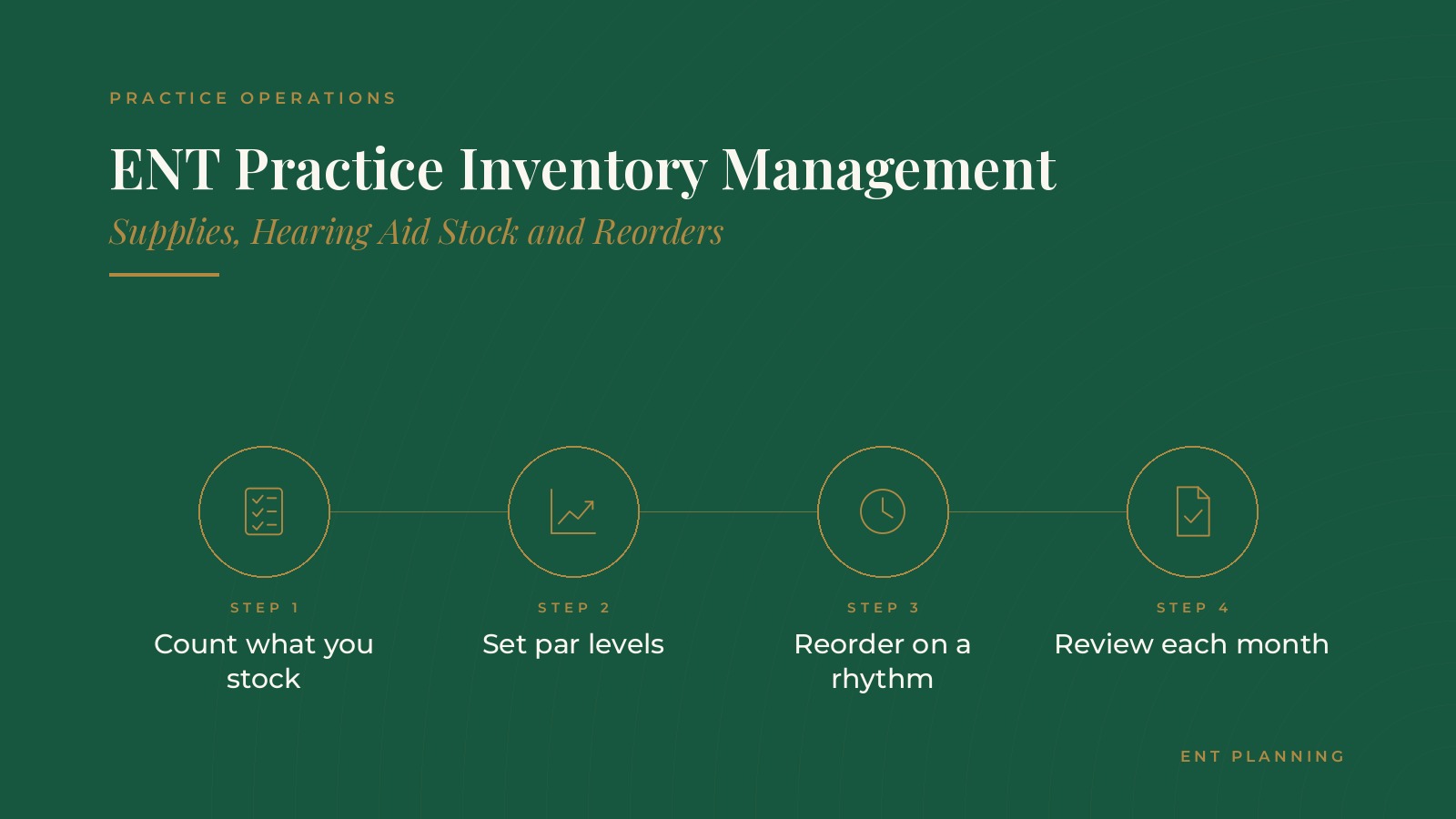
In short, ENT practice inventory management tends to work best when the practice keeps a current list of what it stocks, counts on a set schedule, sets par levels for each item, reorders on a steady rhythm, organizes storage so items are easy to find and reviews usage once a month.
This resource from ENT Planning covers why inventory matters, building an item list, par levels, reorder routines, hearing aid and audiology stock, storage layout, a monthly review and the questions practices often bring to a practice operations professional.
Key takeaways
- Keep a current list of every stocked item.
- Set par levels so reorders are simple.
- Reorder on a steady weekly rhythm.
- Organize storage so items are easy to find.
- Review usage and expiration dates monthly.
Why ENT practice inventory management matters
Clinic days depend on supplies
A missing scope sheath, ear speculum or allergy test kit can delay a visit or force a reschedule. Steady inventory routines keep each room ready.
Many kinds of items
ENT offices stock exam room disposables, scope accessories, cleaning supplies, allergy materials, audiology supplies and office goods, often across several locations.
Less waste
Tracking what is used helps a practice avoid overstocking items that expire on the shelf and running out of items used every day.
The ENT patient flow guide shows how ready rooms support a smooth clinic day.
Building an item list
One list for the practice
A shared spreadsheet or inventory tool lists each item, its supplier, the unit it comes in, where it is stored and who orders it.
Group by area
Organizing the list by area, such as exam rooms, procedure room, allergy, audiology and front office, makes counting faster and clearer.
Keep it current
New items, discontinued products and supplier changes are added to the list as they happen, so it stays accurate for anyone who uses it.
The ENT exam room technology guide covers the room equipment that many practices list alongside their supplies.
Note the unit
Recording whether an item is counted by the box, the case or the single piece prevents mix-ups when one person counts and another places the order.
ENT Planning can introduce you to independent practice operations professionals who work with ENT practices on inventory routines, supply ordering and storage planning. To request an introduction, contact us or call or text (972) 616-4581. You can also read about ENT practice operations.
Setting par levels
What a par level is
A par level is the amount of an item the practice wants on hand after each restock. When stock drops below a set reorder point, the item goes on the next order.
Basing levels on usage
Par levels usually come from how much is used in a typical week or two, plus a small buffer for busy seasons such as allergy and cold season.
Adjusting over time
Reviewing par levels every few months keeps them in line with changes in visit volume, new services and supplier delivery times.
Items with long lead times
Specialty items that take weeks to arrive often carry a higher reorder point, so the order goes in early enough to avoid a gap.
Reorder routines
A set ordering day
Many practices count and order on the same day each week, which makes ordering a routine task rather than a scramble.
One person responsible
Naming one person per area to count and submit orders, with a backup for absences, prevents duplicate orders and gaps.
Receiving and checking
When deliveries arrive, checking items against the order and putting them away promptly keeps counts accurate and shelves organized.
Standing orders
Items used at a steady pace, such as exam gloves and paper goods, can sometimes be set up as recurring deliveries, which leaves weekly counting for items with changing demand.
Hearing aid and audiology stock
Separate tracking
Practices with audiology often track hearing aids, batteries, domes, tubing and cleaning supplies on their own list, since items vary by model and size.
Serial numbers and fittings
Hearing aids are usually logged by serial number from arrival through fitting, so the team always knows which devices are in stock, on order or assigned.
Coordinating with scheduling
Checking upcoming fitting appointments against stock a week ahead gives time to order any device or accessory that is not on hand.
Batteries and small parts
Hearing aid batteries, domes and wax guards move quickly. Keeping them in a labeled drawer near the audiology rooms, with their own par levels, keeps fittings and follow-ups on schedule.
Storage layout and labeling
A place for everything
Clearly labeled shelves and bins, with the most used items at eye level, help anyone on the team find what they need quickly.
First in, first out
Placing new stock behind older stock helps items get used before they expire.
Room carts and kits
Many ENT offices keep a standard cart or drawer layout in every exam room, restocked daily from a central supply area, so each room looks the same.
The ENT clinic layout guide covers how supply and storage areas are often placed in an ENT office.
Temperature sensitive items
Allergy extracts and some testing materials need refrigeration. A dedicated, labeled refrigerator with a temperature log kept by the allergy team keeps these items in good condition.
A monthly review and questions for a practice operations professional
Looking back each month
A monthly check of usage, expiring items, back orders and rush orders shows where par levels or routines need adjusting.
Planning questions
Practices often ask how to choose between a spreadsheet and an inventory tool, how to set par levels across several offices and how to handle supplier changes.
Workflow questions
A practice operations professional can help a practice map who counts, who orders and who receives, and how inventory tasks fit into the weekly schedule.
Multiple locations
Practices with several offices often use the same item list and labels at each site and review usage side by side, which makes it easy to move extra stock from one office to another.
Frequently asked questions
What is ENT practice inventory management?
It is the routine of tracking, storing and reordering the supplies an ENT office uses, including exam, allergy and audiology items.
What is a par level?
It is the target amount of an item to have on hand after restocking, with a reorder point that signals when to order more.
How often do ENT practices reorder supplies?
Many practices count and order on a set day each week, with one named person responsible for each area.
How do practices track hearing aid stock?
Many log hearing aids by serial number from arrival through fitting and check upcoming fittings against stock a week ahead.
How can an ENT office reduce supply waste?
Common habits include first in, first out storage, par levels based on real usage and a monthly review of expiring items.
Request an introduction
ENT Planning can introduce you to independent practice operations professionals who work with ENT practices on inventory management, supply ordering routines and storage planning. Learn more about ENT practice operations, then take the short ENT Planning Business survey and request an introduction. You can also call or text (972) 616-4581, or contact us. The form goes to [email protected].


