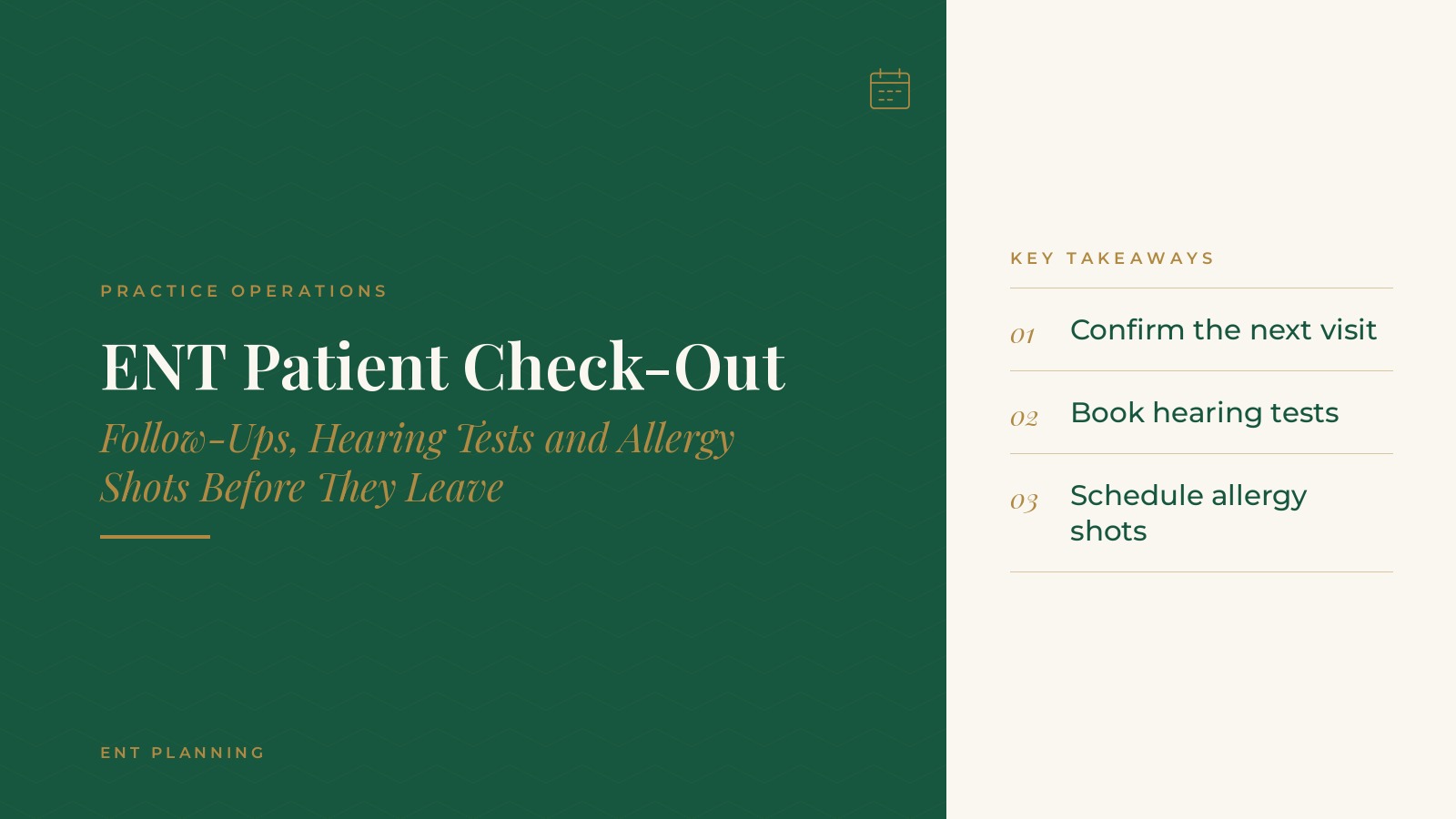
ENT Patient Check-Out: Follow-Ups, Hearing Tests and Allergy Shots Before They Leave
ENT patient check-out is the final step of a clinic visit, when the front desk confirms what comes next and books follow-up visits, hearing tests, allergy shot appointments or post-operative checks before the patient leaves. A smooth check-out keeps schedules full and patients clear about their next step. In short, ENT patient check-out works best when the clinical team hands off clear next steps, the desk books the next visit before the patient walks away and a short checklist keeps the routine consistent. Different visit types, such as audiology and allergy, may each have their own steps. This resource from ENT Planning explains how ENT practices commonly organize check-out, how handoffs from the exam room work, how follow-ups are booked and the questions practices bring to a practice operations professional.
Key takeaways
- Hand off next steps from the exam room clearly.
- Book follow-up visits before the patient leaves.
- Use a short check-out checklist.
- Plan separate steps for audiology and allergy visits.
- Review the routine with the team each quarter.
Why ENT patient check-out matters
The last step shapes the next one
What happens at the desk decides whether the next visit gets booked. When the next step is arranged on the spot, fewer patients have to call back and fewer follow-ups slip through.
A clear picture for the patient
Patients leave an ENT visit with many details: a plan, a prescription, a follow-up, perhaps a hearing test. A calm, organized check-out helps them leave knowing what is next.
A busy point in the day
Several patients often arrive at the desk at once. A written routine keeps the line moving. The guide to ENT patient flow covers the wider path through the clinic.
Handoffs from the exam room
Share next steps clearly
Medical assistants and clinicians can pass a short note to the desk, in the chart or by a standard form, that says what is needed next: a return visit, a hearing test, an allergy shot schedule or a post-operative check.
Use standard wording
A short list of standard follow-up types, such as two weeks, six weeks or as needed, reduces confusion. Staff at the desk know what each one means and how to book it.
Keep the patient informed
Clinical staff can tell the patient what to expect at the desk, such as that the front desk will book the next visit. The guide to ENT patient intake covers the earlier part of the visit.
ENT Planning can introduce you to independent practice operations professionals who work with ENT practices on front desk workflows, follow-up scheduling and patient flow. To request an introduction, contact us or call or text (972) 616-4581. You can also read about ENT practice operations.
Booking follow-ups, hearing tests and allergy shots
Follow-up visits
Booking at the desk is often easier for patients than calling later. A calendar view at the check-out station and clear visit types help staff offer suitable times.
Hearing tests
Audiology visits may need a booth, a specific provider and a longer slot. Desk staff benefit from a quick reference showing visit length and who performs each test.
Allergy shot visits
Patients on allergy schedules often return weekly or monthly. Setting up the recurring schedule at check-out, within the practice's templates, helps patients keep the routine. The guide to ENT practice scheduling covers template planning.
Post-operative checks
Post-operative visits are usually booked as part of the surgical plan. The desk confirms the date and any needed preparation.
A simple check-out checklist
Items many practices include
- Confirm the patient's name and next appointment type.
- Book the next visit and read back the date and time.
- Hand over any written instructions from the clinical team.
- Confirm the preferred reminder method.
- Offer the practice phone number for questions.
Keep it visible
A printed checklist at each station helps new staff learn the routine and gives experienced staff a quick reminder.
Close warmly
A thank you and a clear sign pointing the way out close the visit politely. The guide to ENT patient texting explains how reminders after check-out are planned.
Common check-out mistakes to avoid
Leaving next steps to the patient
When the patient is asked to call back later, many follow-ups never get scheduled. Booking at the desk, while the patient is present, avoids that gap.
Unclear handoffs
If the exam room does not pass along what is needed next, the desk has to guess or ask the clinical team in the middle of a busy line. A standard note solves most of this.
One routine for every visit
A hearing test, an allergy shot visit and a post-operative check each have different needs. A short quick reference at the desk covers each type.
Skipping the review
Without a regular look at the routine, small problems repeat. A quarterly conversation with the desk and clinical staff keeps check-out running smoothly.
Putting a check-out plan together
Gather the inputs
Write down the visit types, the current steps at the desk, the follow-up options and the people involved. Having these in one document makes planning conversations faster and clearer.
Assign roles
Name one person at the desk to own the checklist, one clinical lead to own the handoff note and one person to gather feedback from the team. Clear roles prevent delays.
Try it for two weeks
Choose a start date, post the checklist at each station and run the new routine for two weeks before adjusting. A short trial shows which steps matter and which can be dropped.
Write the review calendar
A one-page schedule with the quarterly review date and the person leading it keeps everyone aligned. Share it with the whole team and update it as plans change.
Reviewing the routine with a professional
Planning questions
- Which visit types need their own check-out steps?
- How do clinical staff pass next steps to the desk?
- How are recurring allergy visits scheduled?
- What does the desk do when the schedule is full?
- How often is the checklist reviewed?
Gather team observations
Front desk and clinical staff see where patients get stuck. A short monthly conversation about what slowed check-out and what helped gives practical ideas for small changes.
Frequently asked questions
What is ENT patient check-out?
It is the final step of a clinic visit, when the front desk confirms next steps and books follow-up visits, hearing tests, allergy shot visits or post-operative checks.
Why book follow-ups at check-out?
Booking before the patient leaves is easier for the patient and reduces call-backs, missed follow-ups and open slots in the schedule.
How do clinical staff share next steps with the desk?
Many practices use a short note or form in the chart with standard follow-up types, so the desk knows exactly what to book.
Do audiology and allergy visits need different steps?
Often yes. Audiology visits may need a booth and a longer slot, and allergy visits may follow a recurring schedule, so each has its own quick reference.
How often should the routine be reviewed?
Most practices review the checklist every quarter and whenever scheduling, staffing or visit types change.
Request an introduction
ENT Planning can introduce you to independent practice operations professionals who work with ENT practices on front desk workflows and follow-up scheduling. Learn more about ENT practice operations, then take the short ENT Business survey and request an introduction. You can also call or text (972) 616-4581, or contact us. The form goes to [email protected].