
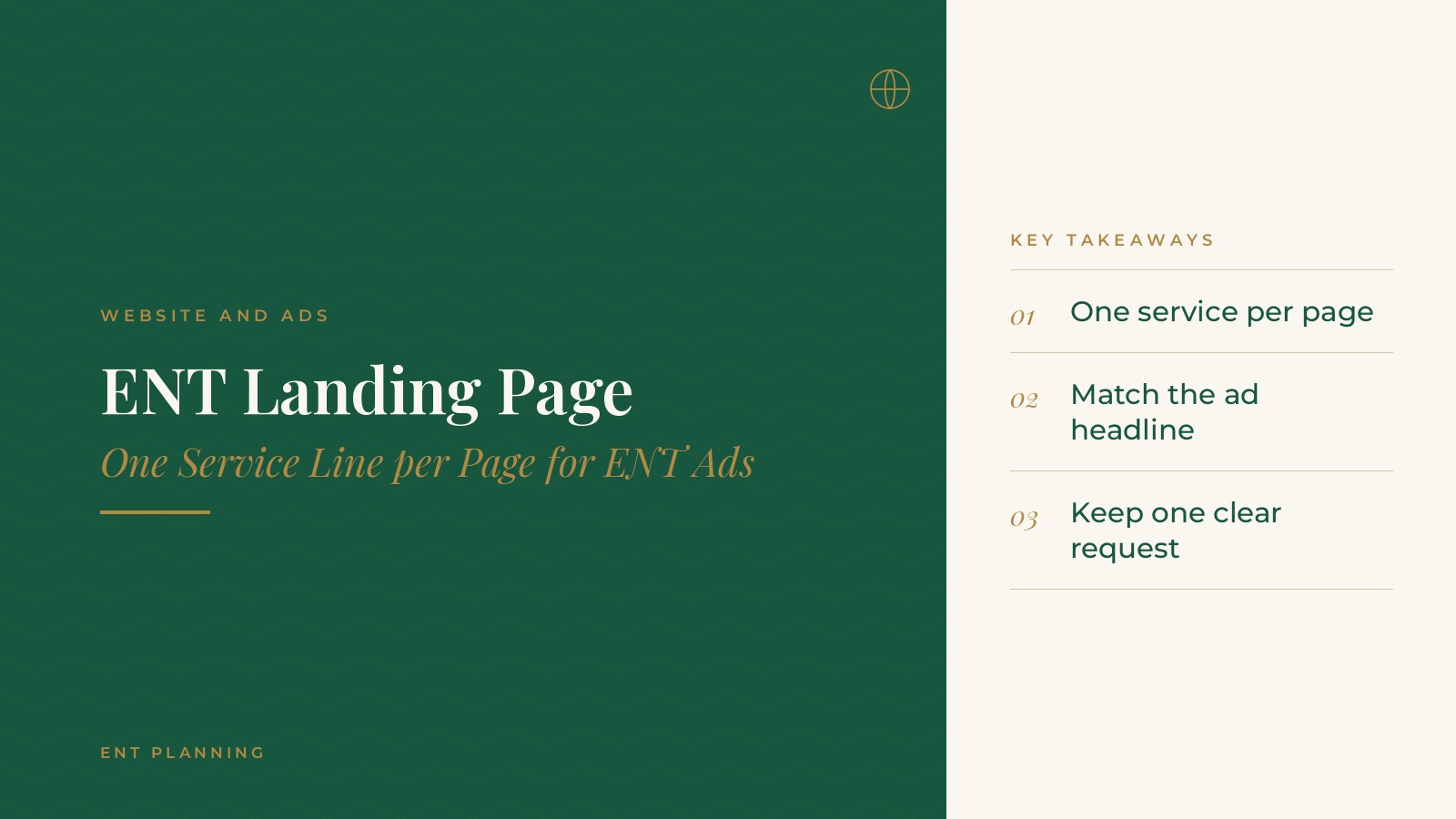
ENT Landing Page | One Service Line per Page for ENT Ads
An ENT landing page is a focused web page that people reach after clicking an ad for one ENT service line, such as sinus care, hearing tests or allergy testing. Because ENT practices offer so many different services, giving each service line its own page keeps the message clear for every group of patients the practice is trying to reach. In short, an ENT landing page works best when it covers one service line only, repeats the words used in the ad, explains the service in plain language, shows the clinicians and locations involved and offers one simple way to call or request a visit, with each page reviewed against call and request data every month. This resource from ENT Planning explains why one service line per page matters, the parts these pages usually include, how practices organize pages across sinus, hearing, allergy and sleep services and the questions practices often bring to a marketing professional.
Key takeaways
- Give each service line its own page.
- Repeat the ad's wording in the headline.
- Show the clinicians and offices involved.
- Offer one clear way to call or request a visit.
- Review each page against monthly call data.
Why an ENT landing page should cover one service line
Different patients, different questions
A parent researching ear tubes, an adult with ongoing sinus trouble and an older adult scheduling a hearing test are looking for very different information. One page that tries to speak to all of them often speaks clearly to none.
Matching the ad group
ENT ad campaigns are usually split into ad groups by service line. Pairing each ad group with its own page keeps the message consistent from the search to the click to the call.
Clearer reporting
When each service line has its own page, call and request reports show which services draw the most interest and where a page or ad may need work. Over time, that view helps the practice decide where to add pages, shift ad budgets between service lines or update the wording on pages that draw visits but few calls.
What an ENT landing page usually includes
A headline that mirrors the ad
The first line repeats the service named in the ad, such as hearing tests in a specific city, so visitors know right away they are in the right place.
A plain service summary
A few short paragraphs explain what the service is, who usually asks about it and how a first visit works, without promising outcomes.
Clinicians and locations
Short profiles of the physicians, audiologists or allergy staff involved, along with office addresses, hours and parking notes, help visitors picture the visit.
One clear next step
A tap-to-call button and a short request form near the top and bottom of the page give visitors one simple action. Forms ask only for contact details and a preferred time.
ENT Planning can introduce you to independent digital marketing and SEO professionals who work with ENT practices on ad landing pages, paid search campaigns and website updates. To request an introduction, contact us or call or text (972) 616-4581. You can also read about digital marketing for ENT practices.
Service line pages ENT practices commonly build
Sinus and nasal care
Pages for chronic sinus concerns, nasal breathing and sinus procedures offered by the practice. The guides to sinus surgery marketing and balloon sinuplasty marketing cover related content.
Hearing and audiology
Pages for hearing tests, hearing aid consultations and audiology visits. The audiology marketing guide explains how practices present these services.
Allergy, sleep and pediatric ENT
Pages for allergy testing, sleep apnea evaluations and children's ear, nose and throat visits, each written for the people most likely to search for them. The allergy practice marketing guide goes deeper on allergy pages.
Writing ENT landing page copy
Plain words patients use
Visitors often search in everyday terms, such as stuffy nose that will not clear or trouble hearing in crowds. Using those words alongside the clinical terms helps the page connect with readers.
Short sections and clear headings
Brief sections with headings like what to expect, who the service is for and locations make the page easy to scan on a phone.
Careful claims
Pages describe services in general terms, avoid promising outcomes and leave clinical decisions to the physicians and audiologists. Many practices have a clinician review each page before it goes live.
Speed, mobile layout and accessibility
Pages that load quickly
Most ENT ad clicks come from phones. Light pages with compressed images and few extra scripts open faster and keep more visitors on the page.
Easy to read on small screens
Large text, short paragraphs and buttons with space around them help visitors who may be reading while waiting in a car or between tasks.
Accessible to everyone
Clear contrast, descriptive button labels, logical heading order and captions on any embedded video help visitors with hearing or vision differences, which matters especially for an ENT audience.
Reviewing ENT landing page performance
Measures many practices watch
- Calls and requests from each page
- Share of visitors who take the next step
- Load time on phones
- Calls answered live versus missed
A monthly review
Many practices compare page results with ad reports each month and test one change at a time, such as a new headline or a shorter form.
Working with the front desk
Pages only work if calls are answered well. A short note to the front desk listing active campaigns and the pages they point to helps staff respond with confidence.
Questions practices bring to a marketing professional
Common planning questions
- Which service lines should get the first landing pages?
- How do pages match the practice's ad groups?
- How are calls and requests tracked by page?
- How often are pages reviewed and updated?
Keeping pages in the practice's name
Many practices keep landing pages on their own website and accounts, with outside professionals added as users, so the pages and their history stay with the practice.
Frequently asked questions
What is an ENT landing page?
It is a focused web page that people reach after clicking an ad for one ENT service line, such as sinus care, hearing tests or allergy testing.
Why should each ENT service line have its own page?
Different services attract different patients with different questions, so a page for each service line keeps the message clear and matches each ad group.
What should an ENT landing page include?
Many pages include a headline that matches the ad, a plain service summary, clinician profiles, office locations and hours, and one simple way to call or request a visit.
Which landing pages do ENT practices build first?
Practices often start with their most active ad groups, such as sinus, hearing and allergy services, then add sleep and pediatric pages.
How are ENT landing pages reviewed?
Many practices review calls and requests from each page monthly alongside ad reports and test one change at a time.
Request an introduction
ENT Planning can introduce you to independent digital marketing and SEO professionals who work with ENT practices on landing pages, paid search and website planning. Learn more about digital marketing for ENT practices, then take the short ENT Planning Marketing & SEO survey and request an introduction. You can also call or text (972) 616-4581, or contact us. The form goes to [email protected].


